
Vastu Shastra
Vastu for Office: A Practical Guide to Layout, Seating and Direction, With Expert Vastu Consultation in Mumbai
Vastu for office explained by Mumbai Vastu expert Richa Pathak: entrance, owner's cabin, seating, departments, desk and remedies for rented offices, with a consultation service for your premises.
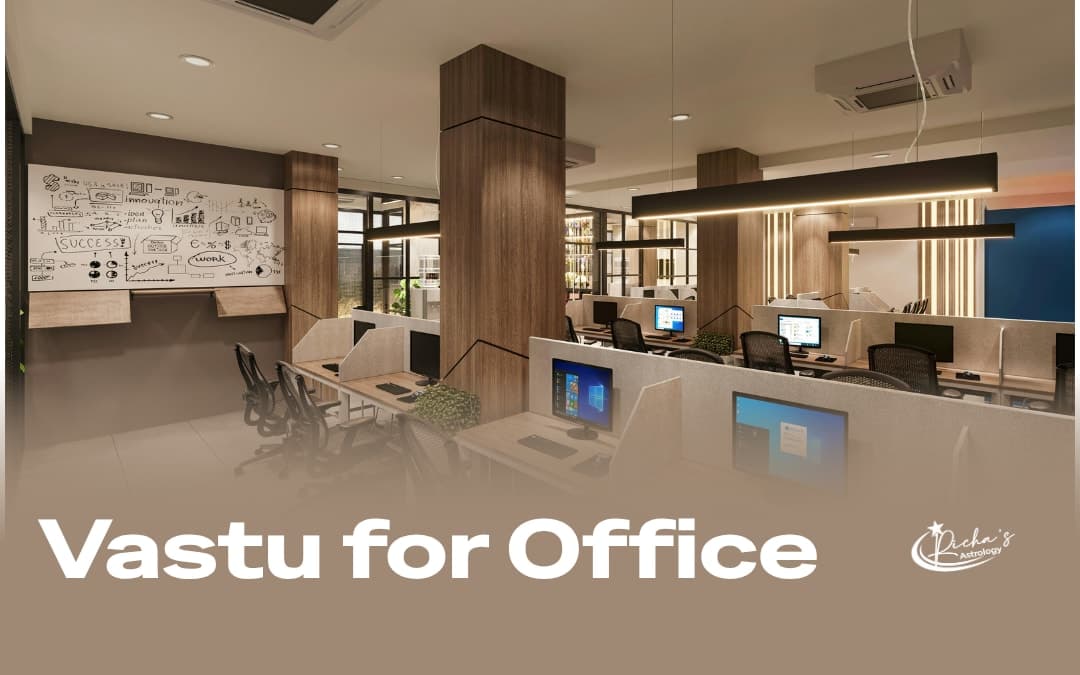
Most people who come to me about their office do not ask, "Is my office Vastu-compliant?" They ask something more honest: "Why does this place feel so heavy?" This guide is written for both questions.
What Office Vastu Can and Cannot Do
Let me be direct before anything else. Vastu does not replace a good product, a sound business plan or a competent team. No arrangement of furniture will rescue a business that has no customers. What Vastu Shastra can do is remove avoidable friction from the space in which you work, so that your attention, your decisions and your team's energy are not fighting the building.
In twenty-five years of visiting homes, shops, clinics and offices, I have found that the same handful of problems show up again and again. The owner who sits with his back to a glass door and never feels settled. The accounts team squeezed into a dark corner. The pantry sitting where the cabin should be. The washroom sitting in the middle of the floor. These are not mysterious. They are layout problems, and most of them have practical solutions.
This article explains the principles, direction by direction, and then tells you what to do when your office is rented, leased or in a tower where you cannot move a single wall. That last situation describes most offices in Mumbai.
The Five Elements in an Office
Vastu divides a space by direction, and each direction is linked with an element and a quality. You do not need to memorise this, but it helps to see why the advice is what it is.
| Direction | Element | Quality | Best Used For |
|---|---|---|---|
| North-East | Water | Clarity, learning | Entrance, reception, drinking water, meditation or prayer corner |
| East | Air and sunlight | New beginnings, growth | Main seating, entrance, windows |
| South-East | Fire | Energy, heat | Pantry, electrical panel, server and equipment |
| South | Fire and earth | Stability, strength | Heavy storage, senior staff seating (facing North) |
| South-West | Earth | Authority, stability | Owner or managing director's cabin, locker, heavy furniture |
| West | Space and earth | Gain, completion | Conference room, storage |
| North-West | Air | Movement, change | Sales, marketing, dispatch, guest area |
| North | Water | Opportunity, money flow | Accounts, cash, reception |
| Centre (Brahmasthan) | Space | Openness | Keep clear and uncluttered |
One rule runs through the whole table: the North-East stays light, open and clean, and the South-West stays heavy and stable. If you remember nothing else, remember that.
The Entrance and the Reception
An office is entered before it is used, so the entrance sets the tone.
- Best entrances: North, North-East or East entrances are traditionally considered favourable.
- Keep the entrance clean: A dim, cluttered doorway is a common problem. Improve the lighting first.
- Maintain the door: The door should open smoothly, inward, and without noise. Oil the hinges if necessary.
- Avoid obstructions: Keep pillars, poles, staircases and large plants from obstructing the entrance.
- Reception placement: Place the reception in the North-East, North or East, where the layout allows. A receptionist facing North or East with a clear view of the entrance can create a welcoming first impression.
- Company branding: Display the company name and logo clearly, with suitable lighting.
- Welcome space: Keep a small, fresh arrangement near the reception, such as a healthy plant or fresh flowers.
The Owner's Cabin and Where to Sit
If there is one place in the office where Vastu matters most, it is the seat of the person who makes the final decisions.
- Location: The South-West of the office is traditionally preferred for the owner or managing director's cabin because it represents stability and authority.
- Direction faced: Sit facing North or East while working, if the layout allows. North is associated with opportunity and money, while East represents growth and clarity.
- A solid wall behind you: Your back should rest against a solid wall, not a window, glass partition or door. This arrangement can also provide a greater sense of support and privacy.
- No beam overhead: Avoid sitting directly under a beam. If you cannot move the desk, consider practical interior design alternatives.
- A clear view of the door: Position the desk so that you can see who enters without turning around.
- A sturdy, high-backed chair: Choose a stable and comfortable chair that supports long working hours.
- Desk shape: A square or rectangular desk is traditionally preferred. Avoid sharp, pointed edges facing you.
- Keep the North-East light: Place a small water vessel or a healthy plant here rather than a heavy cupboard.
Placing Departments
In a larger office, the arrangement of departments is where Vastu becomes practical.
- Accounts and finance: The North is traditionally associated with financial flow.
- Cash box or locker: The South-West is traditionally preferred, with the locker opening towards the North.
- Sales and marketing: The North-West is associated with movement and communication.
- Conference or meeting room: The West or North-West may be suitable.
- Pantry: The South-East is traditionally associated with the fire element. Keep the stove or microwave there where practical.
- Servers and electrical equipment: The South-East is traditionally considered suitable for electrical panels, servers, generators and heavy equipment.
- Washrooms: The North-West or West is generally preferred in traditional Vastu guidance. The North-East, centre and South-West are commonly identified as zones to avoid.
- Staircases: The South, West or South-West may be considered, depending on the building layout.
- Storage and files: The South or West is traditionally preferred for closed cupboards and heavier storage.
- Drinking water: The North-East or North is traditionally preferred.
- Office centre: Keep the Brahmasthan open and uncluttered. Avoid placing a washroom, heavy cabinet or pile of boxes there.
Your Own Desk: Small Changes That Matter
Most employees cannot move a department, but they can change their desk. These are changes I recommend to clients for their teams.
- Face North or East while working, if the layout allows.
- Keep the desk clear and tidy. Only what you use daily should be on top.
- Place the phone, laptop or computer on the South-East side of the desk, where practical.
- Keep a glass of drinking water on the North-East side.
- Store files and papers in drawers or on the West side of the desk, not in a heap in front of you.
- Avoid placing a mirror behind or directly facing your seat.
- Remove broken items, dead plants, expired papers and stopped clocks.
- Keep a small, healthy plant such as a money plant or bamboo in the East or North-East.
- Avoid storing heavy bags and boxes under your desk, particularly near your feet.
Colour, Light and Decor
- Walls: Light, calm colours work best for a relaxed visual environment. Consider white, cream, light yellow, light green or pale blue.
- Lighting: Good, even and bright lighting is one of the most practical improvements you can make. Address dark corners first.
- Ventilation and daylight: Allow natural light from the North and East where possible. Keep windows clean.
- Clock: Traditional Vastu recommends placing a clock on the North or East wall. Ensure that it works correctly.
- Pictures: Choose calm, positive images such as landscapes, flowing water or motivational artwork. Avoid pictures of conflict, aggression or sorrow.
- Water feature: A small fountain or aquarium is traditionally associated with the North-East or North. Keep the water clean and flowing.
- Plants: Choose healthy leafy plants and water them regularly. Avoid thorny or dying plants.
- Prayer or meditation corner: A small North-East corner with a lamp or an image of your family deity is a traditional option.
Seven Mistakes I See Again and Again
- The owner sits facing South or with a glass door behind.
- The washroom sits in the North-East or the centre of the office.
- The cash locker is placed in the North-East or opens towards the South.
- Heavy storage blocks the North-East while the South-West remains empty.
- The pantry or electrical panel is in the North-East.
- Broken equipment, old files and dead plants are kept for years.
- The entrance remains dark or cluttered, even though it is one of the easiest areas to improve.
When You Cannot Change Anything: Vastu in a Rented Mumbai Office
Mumbai's business landscape is mostly rented and leased space: towers in Andheri and Powai, business parks, shop-cum-offices, and shared co-working floors. Walls cannot be broken, washrooms cannot be moved and the entrance cannot be turned. The honest question is: what can you still do? In my practice, quite a lot.
- Rearrange furniture first: Seating direction, desk position and the placement of the cash box are all within your control and can make a difference.
- Use colour and lighting: Changing the lights or introducing suitable colours can improve the overall feel of the office.
- Reorganise by zones: You may not be able to move a pantry, but you can rearrange files, servers and movable storage.
- Use partitions and plants: A healthy plant in the North-East, a cabinet in the South-West and a clear centre can help organise a small office.
- Manage difficult features: If the washroom is in the North-East, traditional guidance recommends keeping its door closed, maintaining cleanliness and keeping the surrounding area bright and uncluttered.
- Prioritise the owner's seat: If you can fix only one thing, review where the owner sits and which direction they face.
- Choose a co-working desk deliberately: A desk facing North or East with a wall behind you is a reasonable goal, even in a shared workspace.
I do not recommend demolition-first Vastu, and I am cautious about anyone who does. In my experience, a careful rearrangement and a few modest changes can address many layout concerns without breaking a single wall.
Vastu and Astrology: Why the Two Belong Together
A building does not exist apart from the people who work in it. That is why I look at both the premises and the owner's birth chart when a client requests a combined consultation.
- Opening muhurat: The date and time for starting a new office, signing the lease or beginning operations can be chosen using the panchang and the owner's chart. Tithis associated with the Sade Teen Muhurat, such as Vijayadashami, are widely considered for important beginnings. A chart-specific muhurat may offer additional guidance.
- The owner's Kundli: I look at the 10th house, associated with career and public standing; the 11th house, associated with gains; the 7th house, associated with partnerships; and the Dasamsa chart (D10), alongside the running dasha.
- Direction suitability: Certain directions may be considered more suitable for an individual owner based on their chart.
- Partnerships: If there are business partners, their charts may be examined as part of a combined consultation.
Astrology and Vastu support each other within traditional practice, but neither promises a result. If someone claims that a Vastu change will guarantee profits, I would advise caution.
Our Office Vastu Consultation
Jyotish Dham offers office Vastu consultations for offices, shops, clinics, studios, factories and co-working spaces, in person in Mumbai and online for clients elsewhere in India and abroad.
What You Receive
- A room-by-room analysis of your premises against Vastu principles.
- Clear guidance on seating, cabin placement and departments.
- Practical remedies that do not require demolition, including rearrangement, colour and lighting suggestions.
- A summary of corrections ranked by importance, so you know what to do first.
- Optional muhurat selection for the office inauguration or opening.
- Optional business Kundli reading for the owner or partners.
How It Works
- Share your details: Provide a floor plan, if available. A hand-drawn sketch is fine. Include the direction the entrance faces and photographs of the main areas.
- Layout assessment: We analyse the layout according to its directions and the nature of your business.
- Consultation: We discuss the findings by phone, video call or an on-site visit.
- Written report: You receive a report with prioritised, practical recommendations.
- Follow-up: After making the suggested changes, you can arrange a follow-up to review the updated layout.
Who It Helps
- Business owners moving into a new office.
- Companies facing repeated staff turnover, workplace conflict or stalled growth.
- Professionals setting up a clinic, studio or practice.
- Anyone who wants a more comfortable and organised workplace.
Frequently Asked Questions
Does Vastu Really Affect Business?
Vastu is a traditional system for arranging space, and many people find that a cleaner, better-organised office improves focus and mood. I treat it as support for good business practice, not a substitute for it.
My Office Is on the 18th Floor of a Tower. Does Vastu Still Apply?
Yes. Traditional Vastu assessments consider the directions and layout of the office, regardless of the floor. We review the floor plan, entrance, windows and seating arrangements.
Which Direction Should the Owner Face?
North or East is traditionally preferred, with a solid wall behind the chair where possible.
My Washroom Is in the North-East. Is This Serious?
It is a recognised concern in traditional Vastu. It can often be managed through careful planning, cleanliness and suitable adjustments. A site review can provide specific recommendations.
Can You Help Over Video or Phone?
Yes. With a floor plan, directional details and photographs, an online consultation can provide practical guidance.
Do I Have to Break Walls or Renovate?
No. I begin with rearrangement and simple adjustments, recommending structural changes only when necessary and practical.
Do You Also Help Choose the Date to Open the Office?
Yes. Muhurat selection is available as an optional service.
Do I Need to Share My Birth Details?
Only if you want Kundli analysis or a personalised muhurat. An office Vastu assessment can be conducted without birth details.
Book an Office Vastu Consultation
A workplace is where most of us spend the better part of our waking hours. It deserves a little attention.
If you are setting up a new office, planning a relocation or if your current workplace feels heavy, stuck or restless, you are welcome to consult me.
Richa Pathak, a Vastu consultant and astrologer in Mumbai, offers office Vastu consultations online and in person at Jyotish Dham, Chandivali, Powai, Mumbai.
About the Author
Richa Pathak is a well-known astrologer and Vastu expert in Mumbai with over 25 years of experience and more than 1,00,000 clients worldwide. She belongs to a third-generation astrology family and is the founder of Jyotish Dham. Her approach combines Kundli analysis with Vastu Shastra to provide practical, solution-focused guidance for career, relationships, wealth and home.
Consult with Richa
Book a consultation with Richa Pathak
Personalized Vastu, astrology, or numerology guidance, in person at Powai, Mumbai, or online worldwide.
Keep reading
More insights
 Vastu Shastra
Best Vastu Consultant in Mumbai: Why Richa Pathak Is a Trusted Choice
Looking for the best Vastu consultant in Mumbai? Discover how Richa Pathak combines Vastu Shastra and Vedic astrology to provide practical, solution-oriented guidance for your home or business.
Read article → Vastu Shastra
Office Vastu Checklist: Simple Corrections That Boost Business Growth
A practical office Vastu checklist for entrance, leadership seating, cash flow zones, and team layout, without structural changes.
Read article → Numerology
Numerology for Newborns: Choosing a Name That Sets Up Lifelong Success
How numerology and astrology work together to choose a baby name aligned with birth number and chart.
Read article →